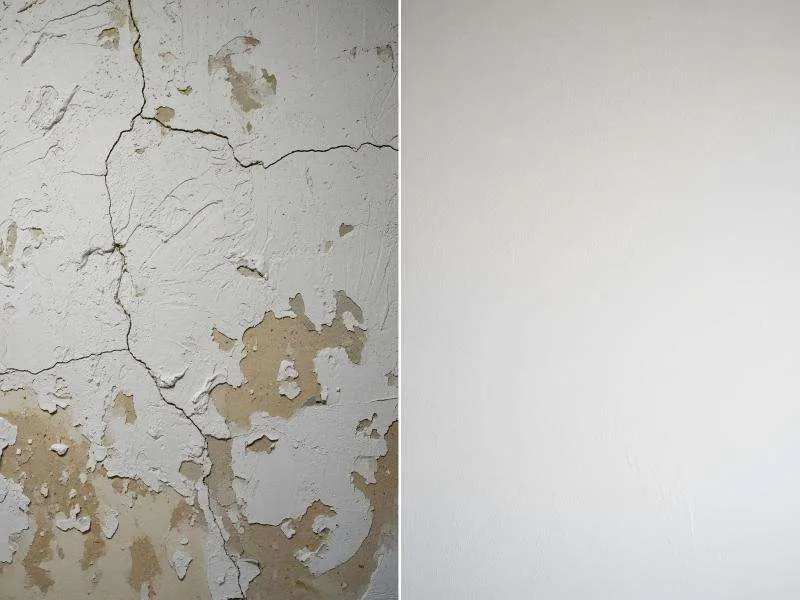
Few topics spark as much debate among masons, contractors and engineers as mortar consistency. Too wet, and you risk structural problems and excessive shrinkage. Too dry, and you compromise workability and bond strength.

Understanding mortar consistency
Mortar consistency refers to the fluidity or stiffness of freshly mixed mortar. This characteristic significantly impacts ease of construction, adhesion to the substrate, and the material’s end-use properties.
The concept sounds straightforward: achieving the right balance of water and dry ingredients. However, this simple concept is deceptive. Proper consistency can vary greatly depending on the following factors:
Specific application (bedding, paving, rendering, etc.)
Substrate characteristics (porosity, texture, moisture content)
Environmental conditions (temperature, humidity, wind)
Installation techniques and tools used
Mortar composition and additives
This complexity explains why experienced masons develop an almost intuitive sense of the proper consistency, which the older generation called “the right feel on the trowel.” While this subjective approach is valuable, it also creates challenges for new workers.
Regarding the structure of mortar, you can click on “mortar construction characteristics” to view
Measuring Consistency
Flow Table Testing (ASTM C1437 / EN 1015-3)
Measures the spread of mortar when subjected to a standard dropping action. A fresh mortar sample is placed on a flow table, molded into a standardized cone, then the table is dropped a specified number of times. The resulting flow diameter—typically 105-115% for general bricklaying mortar—provides a numerical consistency measurement.
Plunger Penetration Tests
Measure the resistance of mortar to a standardized plunger dropped from a fixed height. The penetration depth correlates to consistency, with typical values ranging from 10-15mm for stiff mortars to 30-40mm for fluid applications.
Slump Testing
While more commonly associated with concrete, can be adapted for mortars in certain applications, particularly when working with higher-fluidity materials like self-leveling compounds.
These methods transform consistency assessment from subjective craft to measurable science, creating benchmarks that can be replicated across job sites, communicated in specifications, and verified for quality control.
Application-Specific Consistency Requirements
One size doesn’t fit all when it comes to mortar consistency. Different applications demand specific flow characteristics:
Bricklaying and Block Mortar typically requires a relatively stiff consistency—what masons often describe as “butter-like.” This material should hold its form when bedded but spread easily under the weight of masonry units. Flow values typically range from 130-150mm on a standard flow table.
Rendering and Plastering Mortars require a slightly more fluid consistency that facilitates even spreading while resisting sagging on vertical surfaces. The ideal flow typically ranges from 160-180mm, though this varies based on application technique and layer thickness.
Tile Adhesives present unique challenges, with consistency requirements varying based on tile size, weight, and substrate. For floor tiles, a thicker consistency (140-160mm flow) provides the necessary support, while wall tiling often benefits from a slightly more fluid mix to ensure proper wetting of the substrate.
Pointing and Repair Mortars typically require the stiffest consistency—often described as “earth-damp.” This allows precise placement and immediate tooling without slumping or staining adjacent surfaces.
Self-Leveling Compounds represent the opposite extreme, requiring highly fluid consistency (flow values exceeding 250mm) to achieve their self-smoothing properties without segregation or excessive air entrainment.
Environmental Factors and Consistency Adjustment
Environmental conditions dramatically influence mortar consistency and performance.
In hot, dry environments, mortar loses moisture rapidly through evaporation, potentially compromising hydration and bond strength. Masons sometimes compensate with slightly higher initial water content, but this approach risks structural issues. Modern additives like HPMC (Hydroxypropyl Methylcellulose) offer a better solution by retaining water within the mix while maintaining appropriate consistency.
Cold weather presents different challenges, slowing hydration and extending setting time. Adjusting consistency alone rarely solves these issues—temperature-appropriate admixtures and protected curing become essential.
Wind exposure accelerates surface drying, creating a deceptive situation where mortar appears to be setting when it’s simply forming a dry skin over still-plastic material. This “false set” phenomenon requires careful consistency management and appropriate protection measures.
For some questions about mortar, you can click “Mortar Frequently Asked Questions” to view
The Impact of Modern Additives
Traditional approaches to consistency management relied heavily on water content adjustment, a practice that often forced compromise between workability and performance.
Water-retention agents like HPMC allow mortars to maintain consistency longer without requiring excessive initial water content. This technology effectively decouples working time from water demand.
A construction project in the Middle East exemplifies this advantage. Facing temperatures exceeding 100°F and low humidity, the contractor initially struggled with mortars that dried too quickly for proper installation. After reformulating with Kemox HPMC, they achieved extended working time without increasing water content, resulting in stronger bonds and fewer cracks.
Redispersible Polymer Powders (RDP) further transform consistency management by improving mortar cohesiveness and reducing the water demand needed to achieve workable consistency. This allows formulations with lower water-to-cement ratios that maintain excellent workability while developing superior strength and durability.
Thixotropic additives create mortars that flow under applied pressure but maintain shape at rest—ideal for applications like tile adhesives where sag resistance and good wetting must coexist.
Consistency Retention: The Temporal Dimension
Consistency isn’t static, it changes over time as water evaporates and cement hydration progresses. The period during which mortar maintains workable consistency (often called “board life” or “open time”) significantly impacts installation quality and efficiency.
Traditional mortars begin losing workability shortly after mixing, often becoming unusable within 30-60 minutes. This limitation creates pressure to work quickly or mix smaller batches—both of which can compromise quality and efficiency.
Modern formulations with water-retaining additives like HPMC can extend workable consistency to 2-3 hours or more, depending on environmental conditions. This extended working time allows for more methodical installation, reduced waste, and better overall quality.
Practical Guidelines for Achieving Optimal Consistency
For contractors and masons seeking to achieve ideal consistency, several practical approaches help ensure success:
Follow manufacturer specifications for water addition ranges rather than relying solely on visual assessment. These specifications typically provide water/dry mix ratios optimized for specific products and applications.
Use consistent measurement methods rather than approximating volumes. Graduated buckets or weight-based proportioning significantly improves batch-to-batch consistency.
Account for moisture in sand and aggregates when calculating water additions. Damp sand can contribute significant moisture that must be factored into overall water content.
Allow for appropriate mixing time to ensure uniform distribution of water and additives. Under-mixing often results in inconsistent performance across a single batch.
Consider environmental conditions when planning work and adjust mixing schedules accordingly. During extreme conditions, smaller batches might be preferable despite efficiency impacts.
Conclusion: Consistency as the Foundation of Quality
Proper mortar consistency represents the critical foundation upon which successful masonry, rendering, and tile installation rest. While traditional craftsmen relied primarily on experience and subjective assessment, modern construction benefits from standardized testing methods and advanced chemical additives that make optimal consistency achievable across diverse applications and challenging conditions.
The science behind mortar consistency continues evolving as manufacturers like Kemox develop increasingly sophisticated additives that provide unprecedented control over flow properties, water retention, and workability duration. These innovations enable construction professionals to achieve the perfect balance of application ease and in-service performance, transforming the ancient art of mortar preparation into a precisely controlled science.