When installing tiles on concrete surfaces, it is essential to choose the appropriate adhesive system. The adhesive significantly impacts the long-term durability of the entire tile installation system.

Understanding Concrete as a Substrate
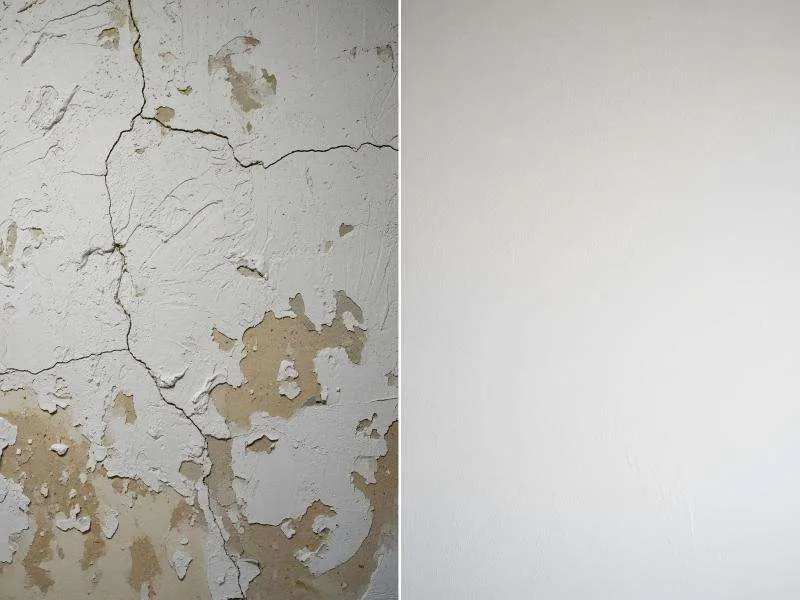
Concrete’s porosity, alkalinity, and potential for moisture penetration present unique challenges for tile installation. Freshly poured concrete contains a high concentration of calcium hydroxide, creating an alkaline environment with a pH typically exceeding 12. This alkaline environment can affect certain adhesive formulations, particularly those containing organic components sensitive to high pH conditions. The surface texture of concrete can vary depending on construction methods. Smooth concrete surfaces require mechanical treatment to achieve optimal adhesion. Rough concrete surfaces require the use of a leveling compound to create a uniform contact area.
Polymer-modified cementitious adhesives
The installation of modern tiles relies heavily on polymer-modified cement adhesives, which combine the structural advantages of cement with the bonding properties of polymer additives. Polymer-modified cement adhesive formulations typically contain redispersible polymer powders (RDP), which rehydrate during mixing and form a flexible polymer network throughout the cured adhesive matrix.
Polymer modification enhances the adhesive’s flexibility, enabling it to withstand thermal expansion and contraction cycles; improves water resistance, reduces permeability, and enhances durability in humid environments; and increases tensile strength and impact resistance.
Hydroxypropyl methylcellulose (HPMC) is another key component in high-performance tile adhesives. HPMC serves as a water-retaining agent, thickener, and workability enhancer. HPMC prevents premature water loss during curing, ensuring full cement hydration and optimal bonding performance. It increases the adhesive’s viscosity, reduces sagging, and enables installation on vertical surfaces.
Regarding HPMC for tile adhesive, you can click “hpmc used in tile adhesive” to view
Classification and Selection
Professional tile adhesives are classified according to various international standards, with the European standard EN 12004 providing comprehensive guidance for cement-based adhesives. C1-grade adhesives have standard performance characteristics suitable for basic installations, while C2-grade adhesives offer superior performance, including enhanced deformation resistance and extended working time.
For concrete substrates, especially those prone to movement or harsh environmental conditions, C2-grade adhesives are critical. These enhanced formulations utilize higher levels of polymer modification to deliver exceptional bonding strength. The deformation resistance of C2 adhesives typically exceeds 2.5 millimeters, while standard formulations have deformation resistance of only 1.0 millimeter.
Adhesives are also influenced by environmental exposure conditions. Outdoor applications require freeze-resistant formulations with enhanced waterproofing performance. Indoor installations in moisture-prone areas such as bathrooms require adhesives with enhanced hydrophobic properties. Many regions experience temperature cycles, which require adhesives to have excellent thermal stability and dimensional compatibility with tiles and substrates.
Regarding concrete additives, you can click “concrete additives” to view
How to conduct quality testing for tile adhesives?
Systematic quality control measures are needed to ensure adhesive performance meets project specifications. Pull-off tests assess bond strength, with the minimum bond strength for standard applications typically specified as 1.0 MPa. Higher bond strengths may be required in more demanding environments. Environmental testing verifies the adhesive’s performance under actual usage conditions. Thermal cycling tests simulate seasonal temperature changes to ensure the adhesive maintains structural integrity throughout its service life. Water resistance tests confirm the system can withstand water immersion without performance degradation. In most applications, properly formulated polymer-modified cementitious adhesives have a service life exceeding 25 years, with some installations maintaining excellent performance even after 40 years or more of use.